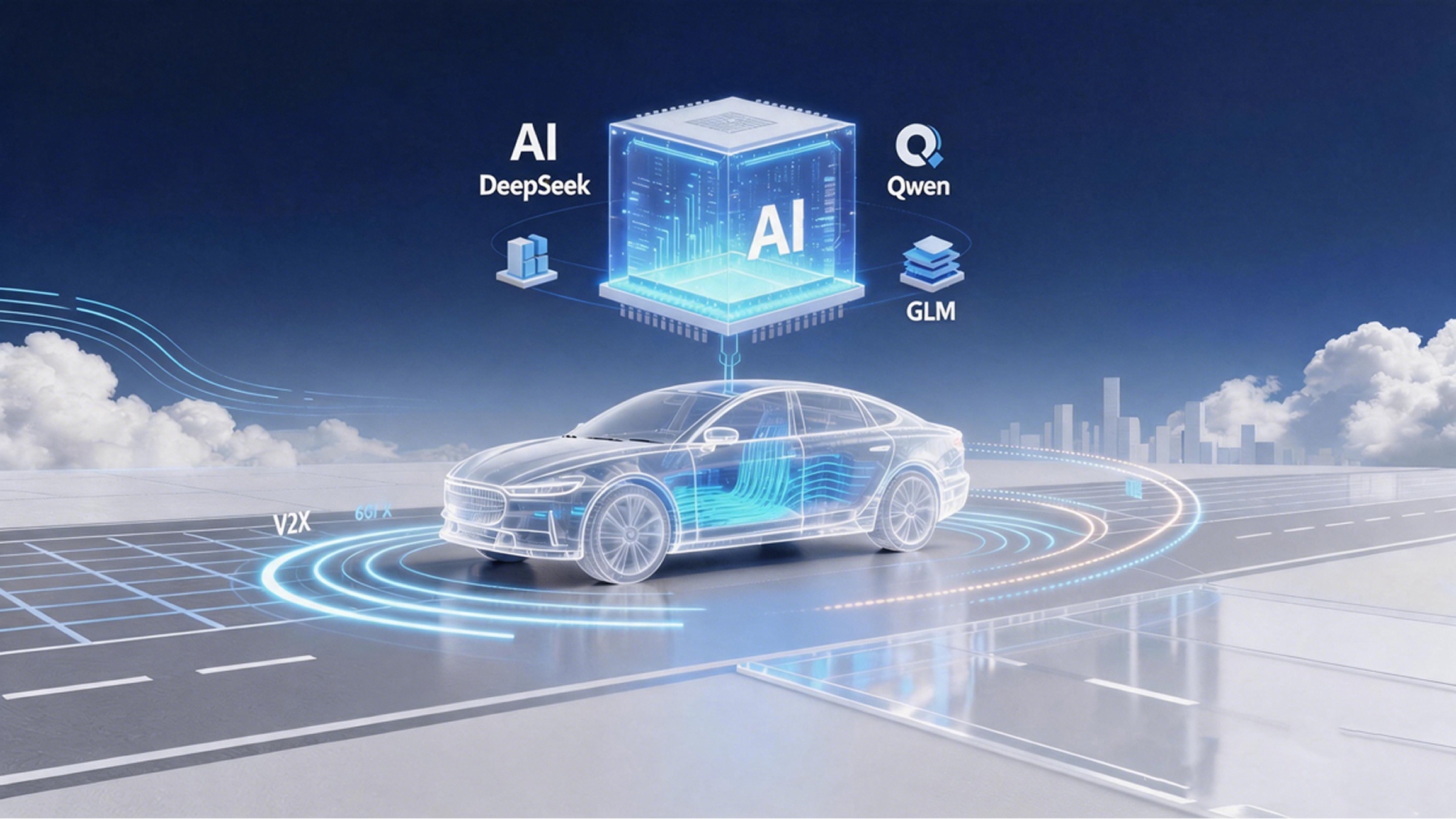
Why Do Automakers Need a "Capability Platform" for AI Transformation?
As generative AI enables business departments to write scripts and perform analysis at low cost, automakers' enthusiasm for AI empowerment has been ignited.
But a more practical question arises:
When business departments start writing their own scripts and integrating with LLMs, the question is no longer "Can we use AI?" but rather — Who is using it? What are they using? Is data leaving the secure environment? Where is the money going?
History has repeatedly proven: tools lower the barrier to "0 to 1," but the governance barrier for "1 to 100" has never disappeared.
Sirun's answer is — do not build LLMs, do not become a substitute, but based on ten years of accumulated SaaS product capabilities, become an "Enabler + Governor + Connector" for automakers' AI transformation.
I. Automakers' AI Enthusiasm Has Been Ignited
The rapid maturity of generative AI is significantly lowering the digitalization barrier for automakers' business departments.
In the past, automakers' digitalization needs relied heavily on IT department scheduling, and a simple report or analysis tool could take months to launch. Today, AI platforms and related tools like Kimi, GLM, and DeepSeek allow business personnel to write scripts and perform analysis at almost zero cost.
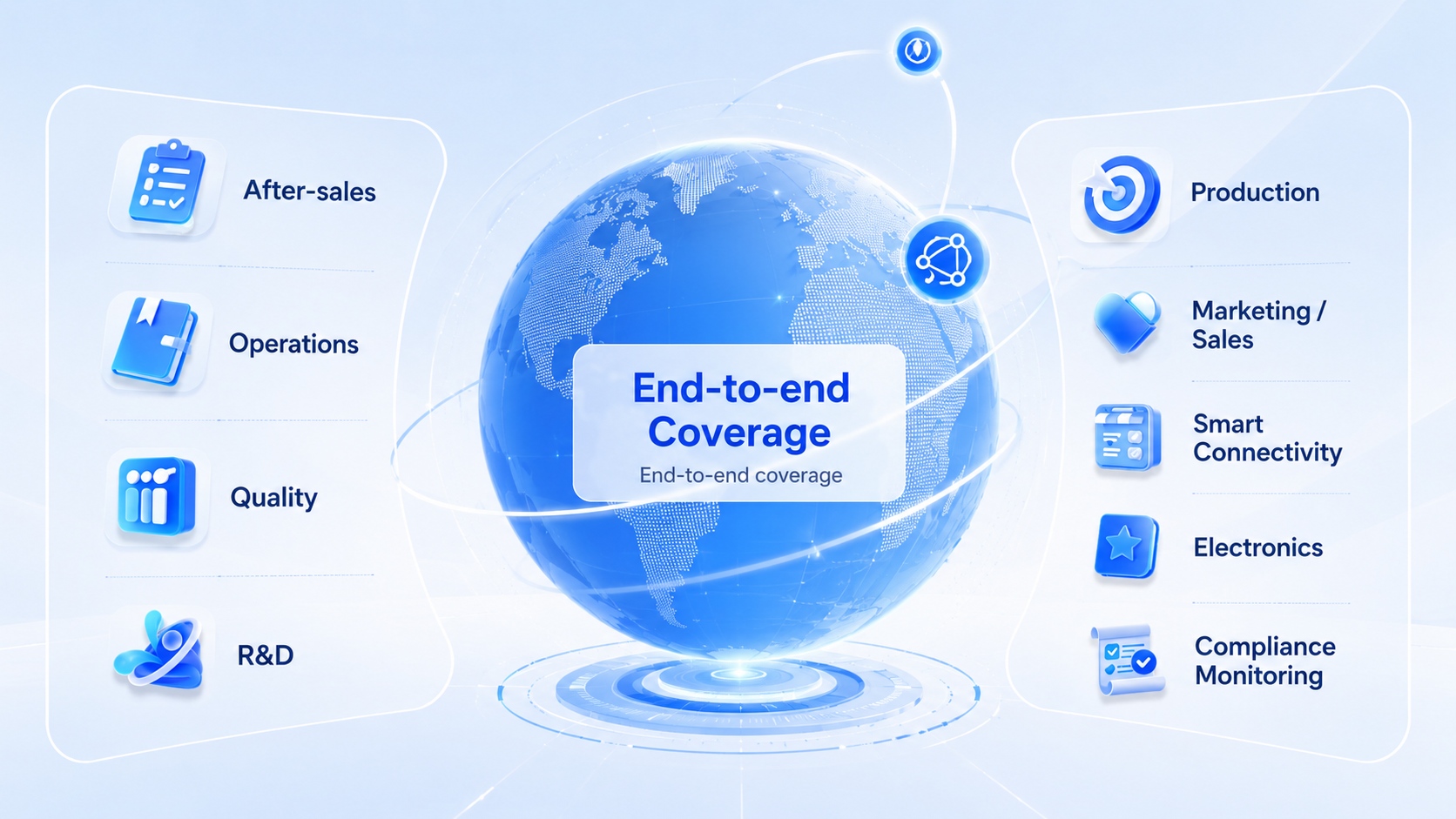
In deep collaboration with a leading automaker, we have observed multiple business departments proactively proposing AI efficiency improvement needs, covering core business domains including after-sales, operations, quality, R&D, production management, marketing and sales, connected vehicles, electronics, and regulatory compliance monitoring:
After-sales and Operations Department: Aim to use AI to analyze massive after-sales logs, shifting from "manual line-by-line review" to "AI automatic summarization," achieving intelligent fault pattern recognition and root cause localization
Quality Department: Existing BI systems can only "view data," hoping to add AI algorithms to achieve anomaly detection and trend warning
SE Department (R&D): Data dispersed across multiple systems, risk identification relies on manual inspection, hoping to achieve "problem finding people"
Production Management Department: Aim to use AI to assist production scheduling optimization, achieve supply chain risk prediction and dynamic inventory allocation, reducing line-stop losses
Marketing and Sales Department: Need AI-driven customer profile analysis to support precision marketing and lead conversion prediction, improving terminal transaction efficiency
Connected Vehicle Department: The surge in connected vehicle data requires AI to perform intelligent analysis on real-time vehicle data, optimizing OTA upgrade strategies and push timing
Electronics Department: The increasing complexity of electrical architectures requires AI to assist in intelligent architecture verification and fault mode prediction, shortening design verification cycles
Compliance Monitoring Department: Facing regulatory differences across multiple regions globally, need AI to automatically track regulatory changes and warn of compliance risks, quickly matching access requirements of target markets through the Global Expansion Knowledge Base, providing decision support for overseas business expansion
The conclusion is clear: customers are more willing to use AI, but what they need is not scattered tools, but an AI innovation platform with a governance framework — a systematic solution that connects business department coverage, AI application platform, AI core platform, and AI data connectivity foundation.
II. Behind the Opportunity Lies the Challenge of Governance
Every round of tool revolution lowers the barrier to "0 to 1" prototype construction. But the engineering, integration, and governance barrier for "1 to 100" has never been truly eliminated.
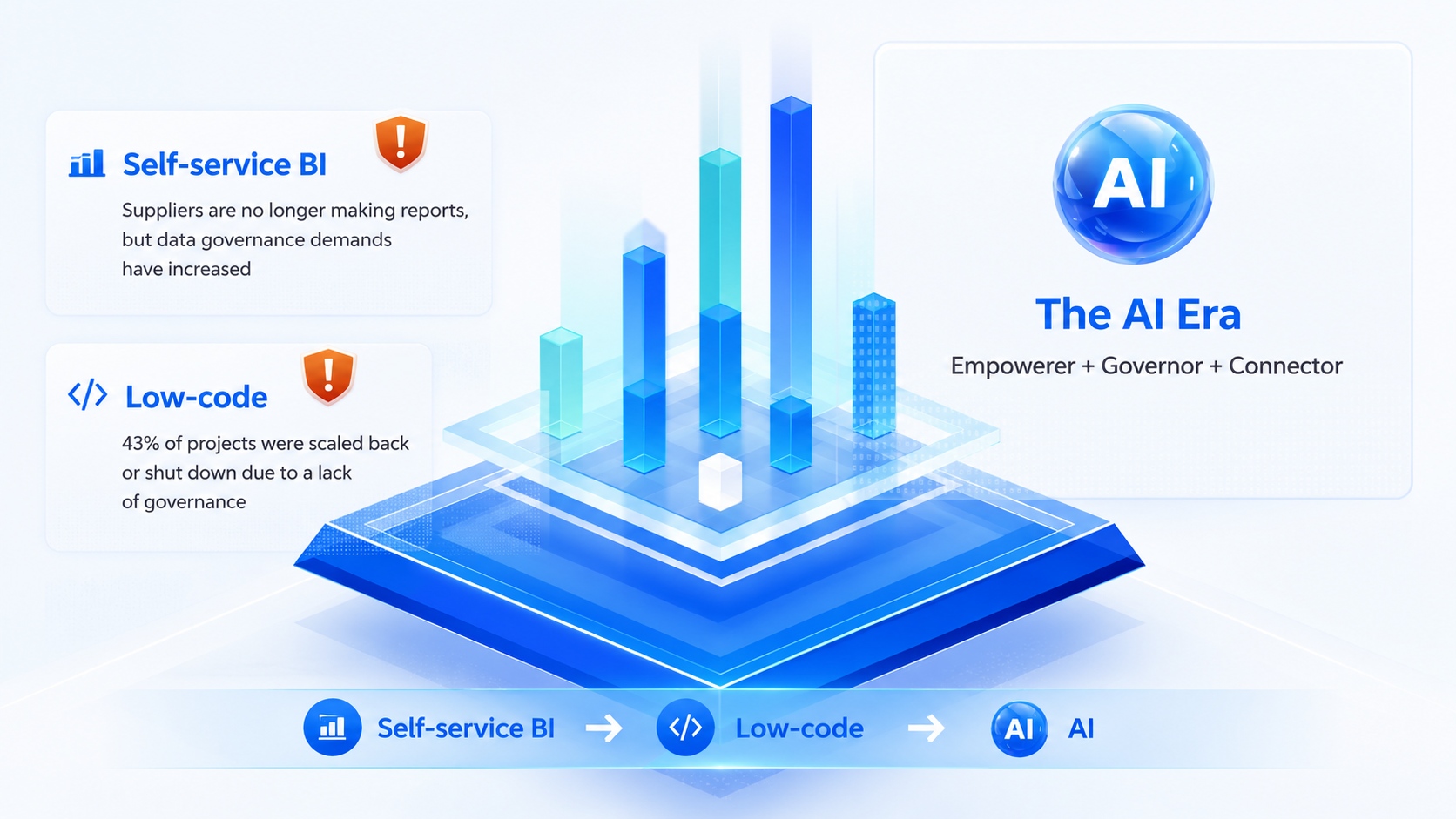
Historical patterns have been repeatedly validated:
Self-service BI Era: Vendors no longer create reports, but data governance needs have increased instead
Low-code Era: 43% of projects were scaled back or shut down due to lack of governance
The simpler the tool, the more complex the governance — this is an iron law of digitalization, and the AI era is no exception.
If automakers allow business departments to use AI tools on their own without incorporating them into a governance system, it will give rise to a new round of "shadow IT" risks — explosion of applications, proliferation of data silos, accumulation of security vulnerabilities, and exposure of compliance risks.
This is precisely Sirun's strategic entry point.
III. Sirun's Positioning: Enabler + Governor + Connector
When automaker business departments can use AI tools to create a working demo in half a day, while traditional project scheduling takes months, this contrast does indeed create impact. But historical results show high consistency: the content of vendors' work changes, but the organizational role has never been replaced.
Sirun is not an "executor" writing code for automaker business departments, but a partner providing "Empowerment + Governance" dual value based on existing SaaS products.
As AI platformization deepens, our role has further extended to "Enabler + Governor + Connector," precisely corresponding to the four-layer architecture:
Enabler → AI Application Platform: Through empowerment tools such as the Global Expansion Knowledge Base, ChatStudio, and Skill Warehouse, as well as business scenario platforms including the log analysis platform, BI+AI enhancement, and risk control platform, enabling nine major business departments to quickly gain AI efficiency improvement capabilities
Governor → AI Core Platform: Through infrastructure such as unified model management, model security audit, intelligent routing and distribution, and compute scheduling management, ensuring AI capabilities are secure, controllable, and auditable during large-scale usage
Connector → AI Data Connectivity Foundation: Through the AI automaker connection center, breaking down data barriers across five major business domains: R&D (PLM, CAE, simulation), production (MES, WMS, APS), quality (QMS, 8D, SPC), sales (DMS, CRM, OMS), and after-sales (TSP, call center, work order); simultaneously, through the Sirun Application Product Center, seamlessly integrating the data assets of two mature product lines — connected vehicle (TSP platform, digital key, owner app) and terminal services (terminal management, FOTA upgrade, configuration management) — into the AI platform, forming differentiated competitiveness
Sirun's mature product accumulation in the connected vehicle and terminal services domains constitutes a unique differentiated competitive advantage. Other AI platform vendors can provide general LLM calling capabilities, but Sirun is one of the few vendors that can simultaneously provide "AI platform capabilities + enabling AI products" — the AI platform has built-in data connectivity with the entire vehicle lifecycle from the design stage, eliminating the need for later adaptation.
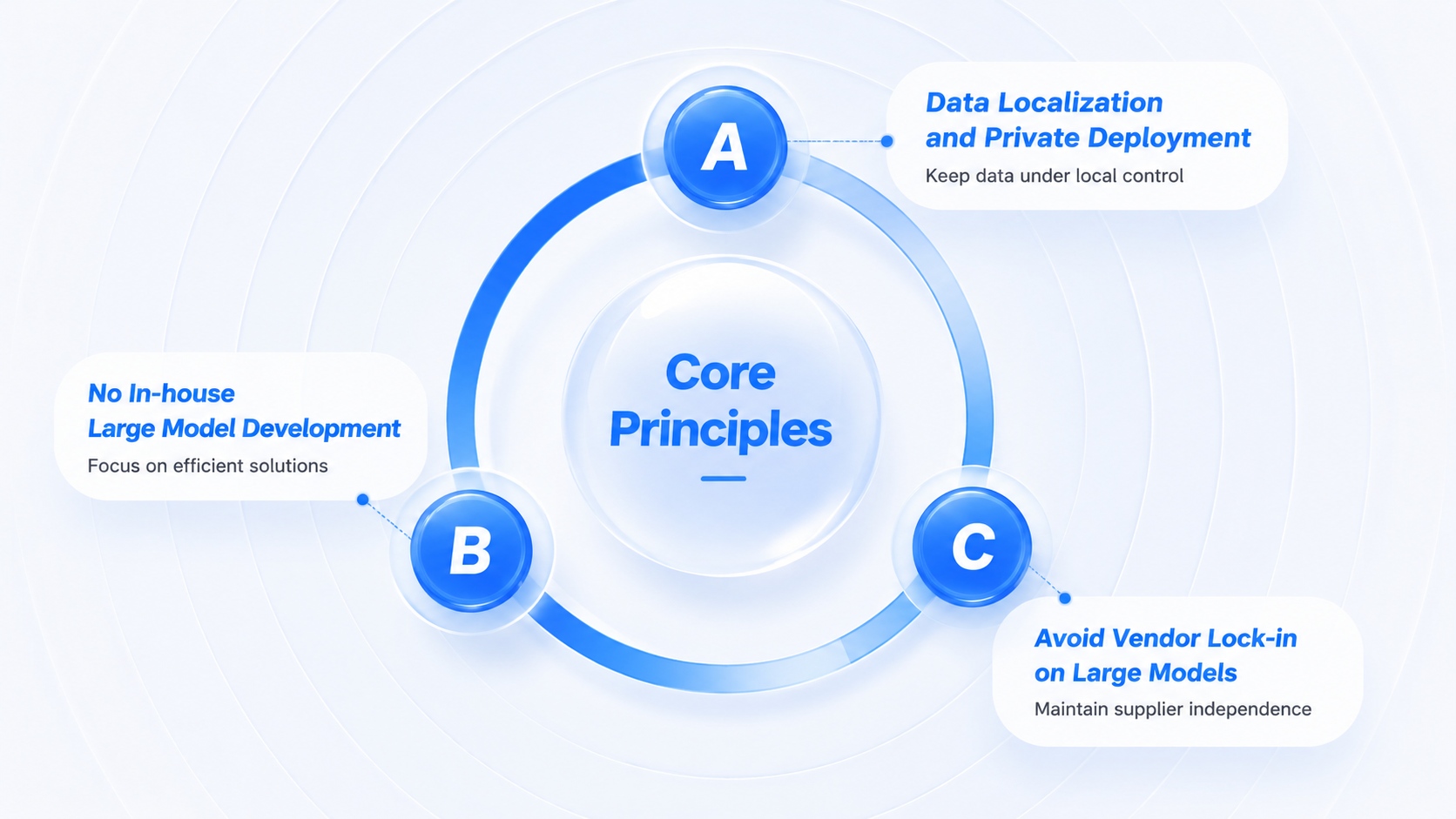
We have established three core principles:
1. No Involvement in LLM R&D
Sirun does not develop or fine-tune large language models on its own, but focuses on building an "AI capability aggregation and governance platform," using the third layer's unified model management and intelligent routing and distribution to achieve flexible scheduling of multiple models.
2. Data Localization and Private Deployment
All sensitive vehicle data and business data are stored locally in the automaker's environment or private cloud. The AI core platform's security audit and compute scheduling modules ensure data does not leave the secure environment and permissions are traceable.
3. Avoid Vendor Lock-in for LLM Providers
Compatible with the coexistence and free switching of multiple models (DeepSeek, Qwen, Kimi, GLM, etc.). Relying on the unified model management module to achieve hot-swappable model switching and gradual version release, automakers can independently choose the optimal model combination based on business scenarios and cost structures.
IV. Automotive AI Capability Platform: AI for-Car Capability Aggregation and Intelligent Application Platform
Based on the three-layer architecture of "AI Application Platform + AI Core Platform + AI Data Connectivity Foundation," Sirun creates a controllable, manageable, and reusable enterprise-grade AI system for automakers, achieving end-to-end connectivity from underlying data to top-level business.
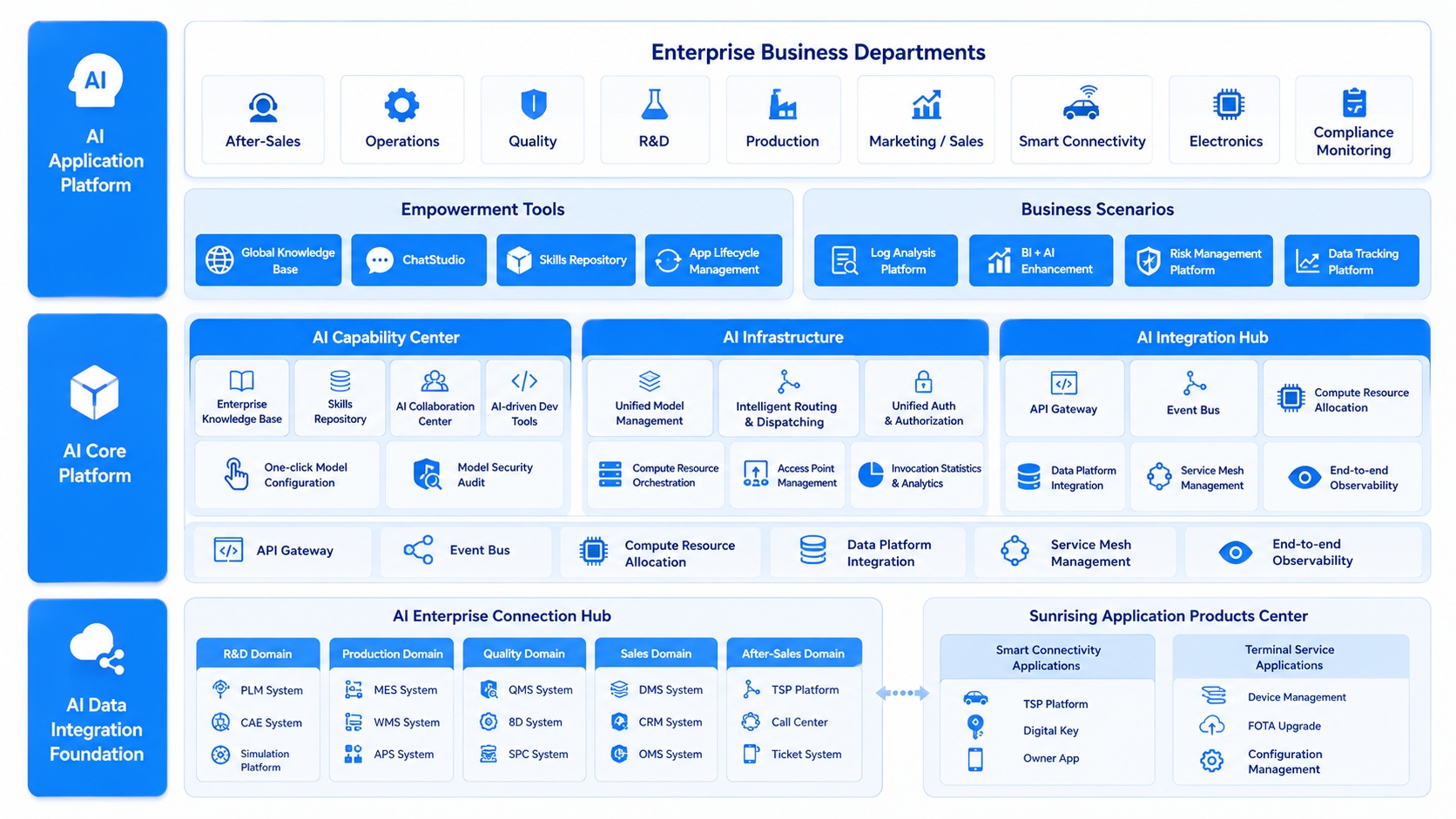
Architecture Diagram
Layer 0: Automaker Business Departments — End-to-end AI Empowerment Coverage
Problem Solved: Automakers have numerous departments and distributed business scenarios, making it difficult for AI capabilities to reach every business unit, resulting in uneven intelligent transformation progress.
Core Value:
Cover core departments across all areas including after-sales, operations, quality, R&D, production management, marketing and sales, connected vehicles, electronics, and compliance monitoring
Each department receives tailored AI capability injection, breaking down the intelligence divide between departments
Move from pilot projects to comprehensive empowerment, making AI a basic productivity tool available to all employees
Layer 1: AI Application Platform — Zero-code Intelligence Creation
Problem Solved: Business needs face long scheduling delays and insufficient technical personnel, leaving numerous value scenarios pending; at the same time, there is a lack of unified AI application management tools to support full lifecycle operations.
Core Value:
Non-technical personnel can self-build AI applications in 1-2 days, shortening the development cycle from 2-4 weeks to 1-2 days
Demand response shifts from "waiting for scheduling" to "immediate self-service"
Through application lifecycle management, achieve full-process control over AI application release, iteration, and retirement
Core Capabilities:
Empowerment Tool Layer: Global Expansion Knowledge Base supports global business compliance and localization operations; ChatStudio provides a low-code environment for building conversational AI applications; Skill Warehouse enables reuse of excellent AI skills across the organization; Application Lifecycle Management covers the complete loop from creation to retirement
Business Scenario Layer: Log Analysis Platform empowers after-sales and operations departments to efficiently locate root causes; BI+AI Enhancement provides intelligent data analysis and decision support for quality departments; Risk Control Platform helps R&D departments achieve early identification and warning of project risks; Data Tracking Platform enables visualized end-to-end data tracking and governance
Layer 2: AI Core Platform — Organizational Intelligence Assetization and Capability Engine
Problem Solved: Various departments connect to different LLMs on their own, with API Keys scattered everywhere, resulting in chaotic management and uncontrolled costs; useful Prompts and methodologies are mastered by only a few people and cannot be reused, leading to redundant efforts.
Core Value:
Unified access to 20+ mainstream models, ready to use out of the box, eliminating the management fragmentation caused by multiple vendors
Unified billing reduces finance reconciliation time by 90%, end-to-end operation traceability reduces security risks by 90%
Skill Marketplace makes the enterprise "AI application store" a reality, turning best practices from "word of mouth" into "permanent assetization"
New employee onboarding time shortened from 2-4 weeks to 2-3 days
Core Capabilities:
AI Capability Center: Enterprise Knowledge Base enables structured assetization and intelligent retrieval of knowledge; Skill Warehouse centrally manages reusable AI skills and Prompt templates; AI Cloud Collaboration Center supports cross-team intelligent collaboration; AI-Driven Development Tools provide coding assistance and intelligent review; One-click Model Configuration enables rapid model selection and deployment; Model Security Audit ensures every call is traceable and auditable
AI Infrastructure: Unified Model Management enables centralized management of multi-vendor models; Intelligent Routing and Distribution automatically matches the optimal model based on business needs; Unified Authentication and Authorization ensures access security; Compute Scheduling Management enables elastic allocation of GPU and CPU resources; Access Point Management provides a unified external service entrance; Call Statistics and Analysis provides comprehensive usage and cost analysis
AI Integration Center: API Gateway uniformly manages internal and external service interfaces; Event Bus enables reliable asynchronous message delivery; Compute Resource Allocation enables containerized elastic scaling; Data Middleware Integration connects existing enterprise data assets; Service Mesh Management ensures stable inter-service communication; End-to-end Observability enables complete链路 tracing from request to response
Layer 3: AI Data Connectivity Foundation — Deep Integration of Automaker Systems and Sirun Products
Problem Solved: The AI platform lacks unified data connectivity channels with automakers' existing business systems and Sirun's own products, forming data silos. The AI platform cannot access real business data, significantly reducing implementation effectiveness.
Core Value:
Connect five major core business domains of automakers with Sirun's connected vehicle and terminal services product lines, achieving seamless data flow
The AI platform is no longer an abstract concept, but an intelligent enhancement layer rooted in real business systems
Core Capabilities:
AI Automaker Connection Center: Covers five major business domains — R&D (PLM system, CAE system, simulation platform), Production (MES system, WMS system, APS system), Quality (QMS system, 8D system, SPC system), Sales (DMS system, CRM system, OMS system), After-sales (TSP platform, call center, work order system) — achieving standardized connectivity with automakers' existing IT systems
Sirun Application Product Center: Includes connected vehicle applications (TSP platform, digital key, owner app) and terminal service applications (terminal management, FOTA upgrade, configuration management), deeply integrating Sirun's own product capabilities into the AI platform, forming a complete "platform + product" solution loop
V. Implemented Benchmark Scenarios and Business Closure
Based on Sirun's existing TSP platform, big data analysis system, and other product capabilities, we have co-created multiple high-value scenarios with automaker customers, achieving substantial implementation results:
● Aftermarket log analysis platform has been completed and deployed
● Quality BI+AI enhancement POC is ready
● SE (R&D) risk control platform requirements are clearly defined
● Production data tracking platform solution has been finalized
At the same time, the platform has accumulated AI application paths covering business scenarios including after-sales, quality, R&D, and global expansion, forming a complete loop from "demand insight → agile development → rapid launch → effect validation," achieving an orderly evolution from "business-led innovation" to "governance-enabled empowerment."
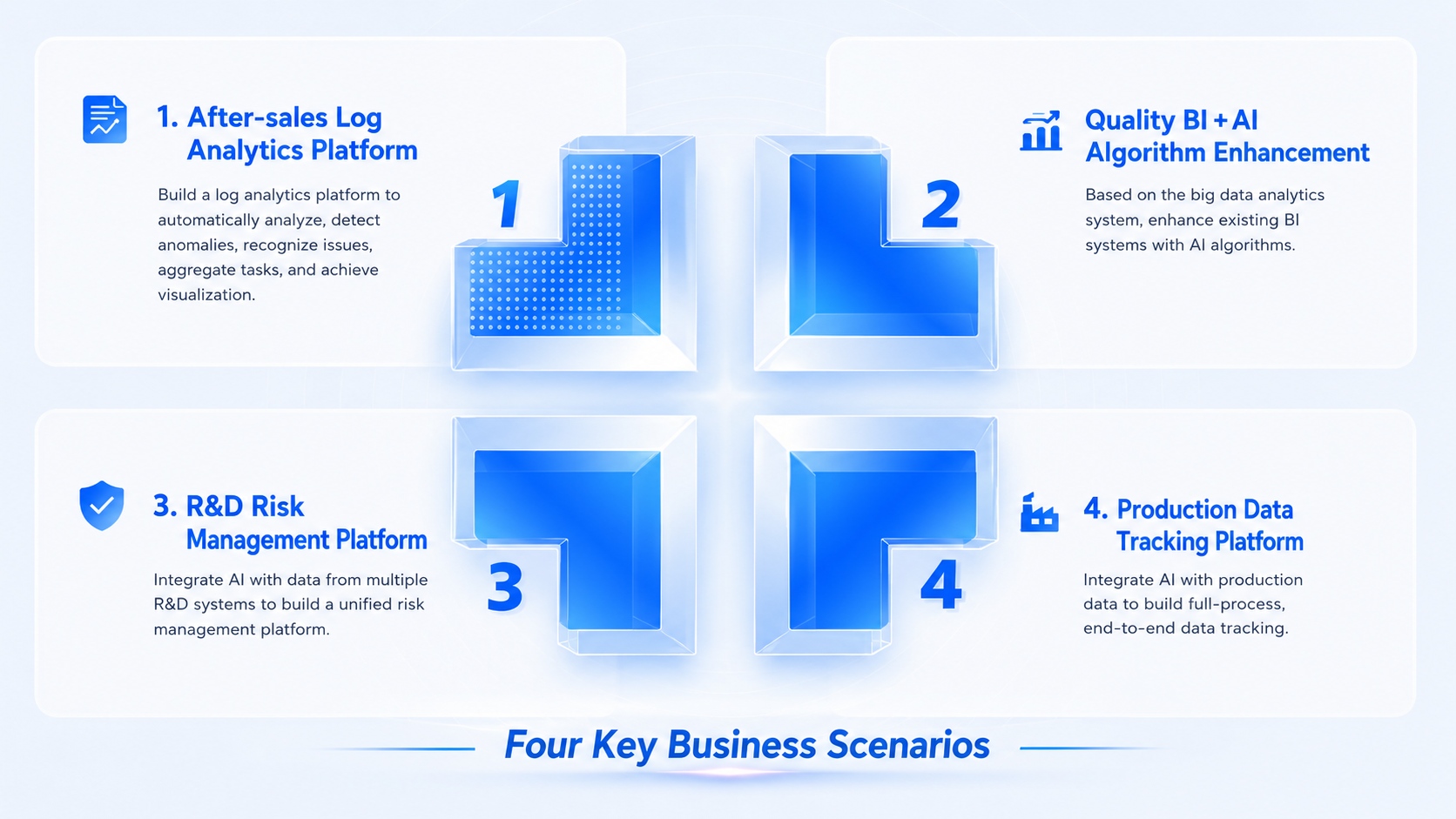
Scenario 1: After-sales Log Analysis Platform
Pain Point: Large volume of after-sales logs, time-consuming analysis, low efficiency of manual line-by-line review.
Solution: Build an AI log analysis platform for automatic parsing, anomaly identification, task summarization, and visualized presentation. The platform directly connects to after-sales domain systems including the TSP platform, call center, and work order system through the AI Data Connectivity Foundation, gathering real-time vehicle operation logs, customer repair records, and maintenance work order data, achieving unified access and intelligent analysis of multi-source heterogeneous data.
Value: Log analysis shifts from "manual line-by-line review" to "AI automatic summarization + human decision-making."
Scenario 2: Quality BI + AI Algorithm Enhancement
Pain Point: The quality department already uses a BI system to track supplier quality, but can only "view data," not "understand data" — lacking anomaly detection and trend warning capabilities.
Solution: Provide AI algorithm capabilities to the existing BI system based on the big data analysis system. By connecting to quality domain systems including QMS, 8D, and SPC, gathering incoming inspection data, non-conforming product processing records, and process control indicators, the AI algorithm performs anomaly detection, root cause analysis, and trend prediction on a complete quality data foundation.
Value: Shifts from "post-event report viewing" to "pre-event warning + in-event intervention."
Scenario 3: R&D Risk Control Platform
Pain Point: R&D and SE department project data is dispersed across multiple systems including PLM, CAE, and simulation platforms. Risk identification relies on manual periodic inspections, leading to delayed issue detection and difficulty in cross-system traceability. Often, risks are only addressed after they have already occurred.
Solution: Build an AI risk control platform that aggregates multi-system data from the R&D domain through the AI Data Connectivity Foundation. The AI automatically identifies anomaly patterns and potential risk signals, achieving "problem finding people" — automatic anomaly discovery, automatic risk grading, and automatic alert distribution to responsible persons.
Value: Shifts from "manual inspection to find problems" to "AI proactive warning + automatic distribution." Risk discovery cycle shortens from weeks to days, dramatically improving R&D project risk response efficiency.
Scenario 4: Production Data Tracking Platform
Pain Point: Production and quality department data is scattered across multiple systems including MES, WMS, QMS, and SPC, making it impossible to achieve end-to-end traceability from raw material receipt to finished product shipment. Once a quality issue occurs, root cause analysis is time-consuming and difficult to pinpoint.
Solution: Build an AI data tracking platform that breaks down data barriers between the production domain (MES, WMS, APS) and quality domain (QMS, SPC) through the AI Data Connectivity Foundation, achieving end-to-end visualized tracking and intelligent root cause analysis. Data is automatically linked across systems, and anomaly nodes are highlighted for easy localization.
Value: Shifts from "single-point data viewing" to "end-to-end traceability with localizable root causes." Quality issue traceability time shortens from days to minutes, comprehensively improving production transparency and control capabilities.
Four Empowerment Tools: Making AI Capabilities Accessible
On top of the four business scenarios, the AI Application Platform also provides a complete set of empowerment tools, enabling every business department to use AI with low cost and high efficiency:
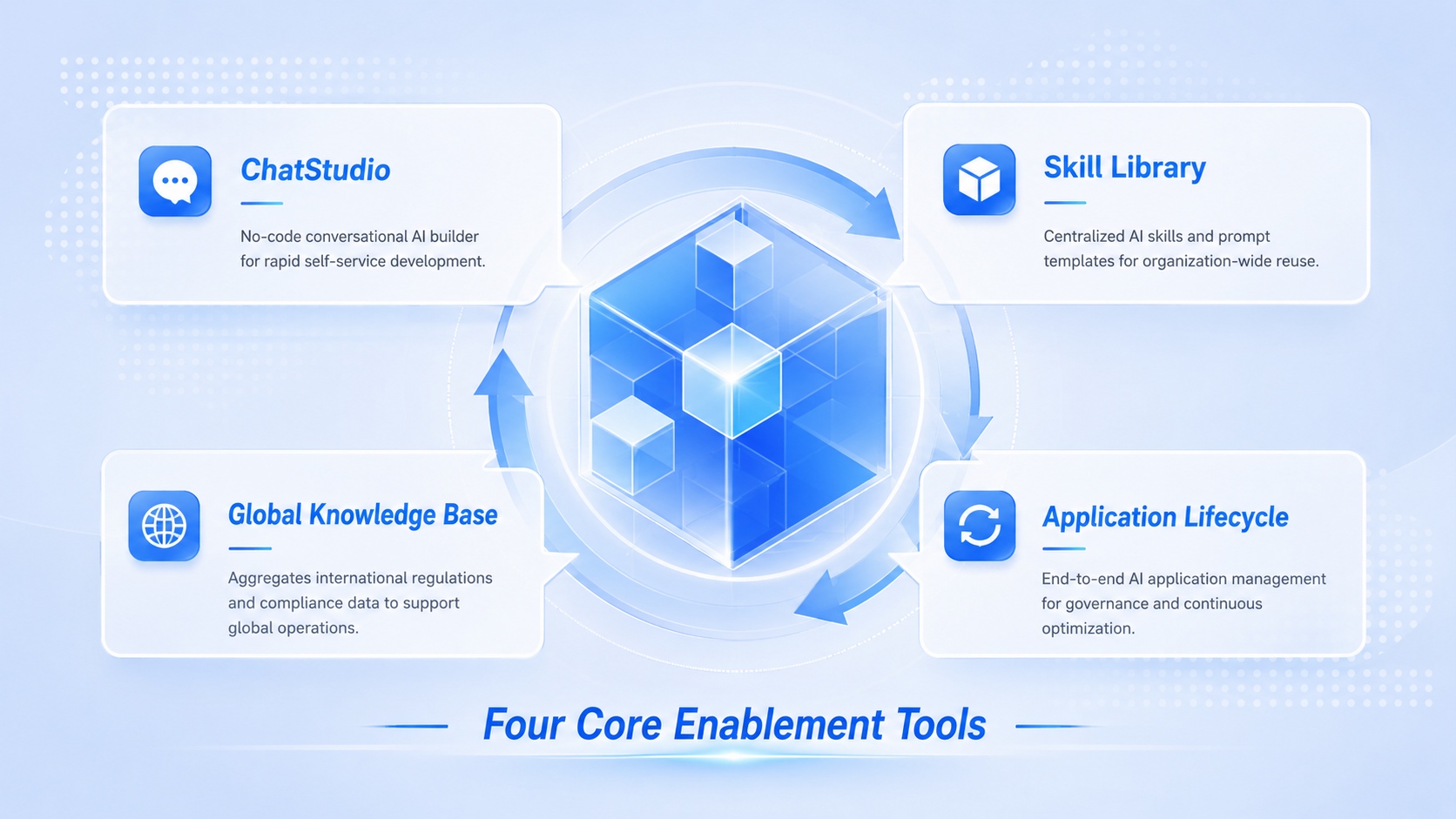
Global Expansion Knowledge Base: Designed for automakers' global business, aggregating overseas regulations, compliance requirements, and localization operational knowledge, helping overseas markets operate efficiently and compliantly while reducing cross-border business information barriers.
ChatStudio: Provides a no-code environment for building conversational AI applications. Business departments can self-create intelligent assistants in 1-2 days without technical backgrounds. Demand response shifts from "waiting for scheduling" to "immediate self-service."
Skill Warehouse: Centrally accumulates excellent AI skills, Prompt templates, and best practices within the enterprise, achieving reuse and continuous accumulation of AI capabilities. Excellent experiences shift from "mastered by individuals" to "organizational assets."
Application Lifecycle Management: Covers the full lifecycle of AI applications from creation, release, iteration, to retirement, ensuring every AI application operates healthily within the governance framework, achieving a balance between "business-led innovation" and "governance-enabled empowerment."
VI. Five Major Changes: From Disorderly Exploration to Systematic Empowerment
Essentially, this is not a tool upgrade, but an organizational capability restructuring. After deploying the automotive AI capability platform, automakers will achieve the following systematic changes.
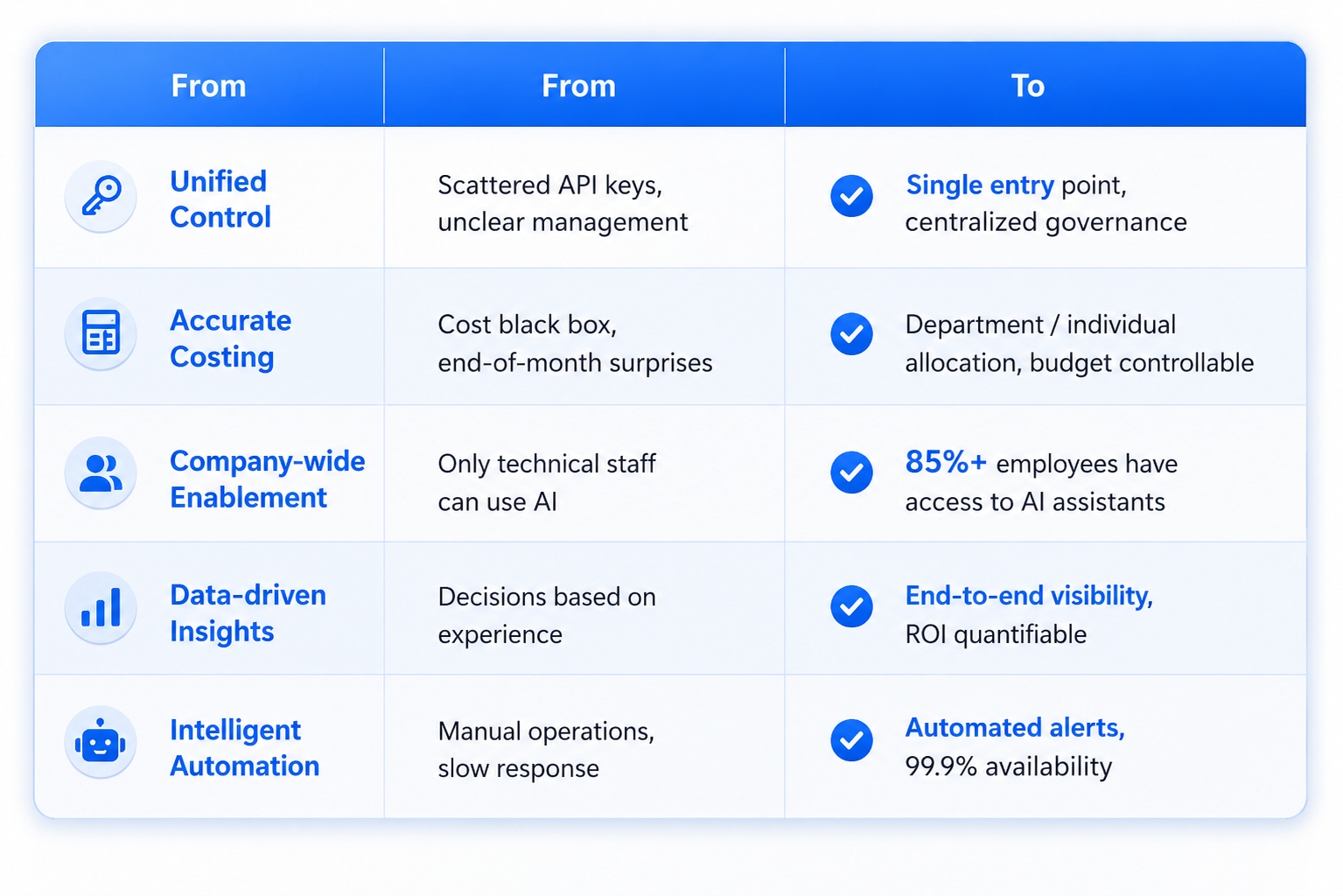
Change 1: From "Scattered Tools" to "Unified Control"
Current State: Various departments register their own AI tool accounts on their own, with API Keys scattered across employees' personal email, chat records, and even code repositories. Management is chaotic, and permissions of departing employees cannot be revoked in a timely manner.
After Change: Enterprise-grade unified entry for AI resources, with centralized authentication, authorization, and auditing. API Keys are managed uniformly, permissions can be revoked at any time, and operations leave end-to-end traces.
Quantified Value: API Key management centralization improves by 90%. Security incident response time shortens from 24 hours to real-time.
Change 2: From "Cost Black Hole" to "Precision Billing"
Current State: At month-end, looking at the bill, no one knows who used what, how much was used, or where the money went. Budget overrun rates are as high as 40% to 60%, and finance departments have no way to control it.
After Change: Precise cost allocation by department and individual, real-time usage visibility, controllable and predictable budgets. Monthly automatic cost reports, and automatic alerts for threshold exceedances.
Quantified Value: Cost visibility rate increases from below 30% to over 95%. Budget deviation rate significantly decreases.
Change 3: From "Only a Few Can Use" to "Universal Access"
Current State: AI capabilities are mastered only by technical teams. Business departments have needs but cannot implement them, and numerous value scenarios are shelved.
After Change: Every employee has an independent AI assistant. Non-technical personnel can self-build AI applications in 1-2 days. AI penetration rate increases from 15% to over 85%.
Quantified Value: Average daily AI interactions per person increases from 5 to over 50 times. Application development cycle shortens from 2-4 weeks to 1-2 days.
Change 4: From "Experience-driven" to "Data-driven"
Current State: Managers rely on intuition to judge the effectiveness of AI investment, cannot articulate ROI, and find it difficult to decide whether to increase investment.
After Change: End-to-end observability — who is using it, which models are being used, how much is being spent, what results are being produced — all visible at a glance. Usage dashboards, departmental rankings, model usage distribution, and cost-output correlation analysis support precision decision-making.
Quantified Value: From "month-end surprise" to "daily visibility," AI strategy implementation becomes quantifiable and traceable.
Change 5: From "Passive Response" to "Intelligent Autonomy"
Current State: User provisioning takes 1-2 days with manual approval. Quota alerts rely on manual inspection. Audit reports rely on manual statistics.
After Change: Immediate self-service user provisioning. Automatic alerts for usage thresholds. One-click export of audit reports. Containerized automatic recovery of systems.
Quantified Value: User provisioning time decreases by 99%. Audit report generation time shortens from 2-3 days to 5 minutes. System availability reaches 99.9%.
VII. Conclusion: Sirun's Role and Commitment
As the automotive industry enters a critical upgrade window for AI-enabled business, automakers' digitalization practices have shifted from isolated explorations to systematic breakthroughs. Sirun's role has thus been redefined:
We are by no means vendors who passively respond to needs, but fellow travelers walking side by side with automakers to drive AI transformation.
This industry transformation is both a major opportunity for us to co-create value with our partners and a profound responsibility to drive industry intelligence upgrades.
We are not brand marketers of AI. We focus on the engineering implementation of AI — enabling data from every vehicle to be securely collected, efficiently governed, intelligently analyzed, and reliably executed.
In the future, we will use technology as a bond and value as the core, working hand in hand with automakers to clear the entire chain of AI implementation, jointly sailing towards the intelligent new future of the automotive industry.
The core difference is not who adopts AI earlier, but who can transform AI into organizational capability.
Sirun is joining hands with automotive enterprise partners, marching together towards an intelligent new future.
For more product details or to schedule a demo, please contact the Sirun AI Solutions Team or click "Contact Us" to send your contact information.