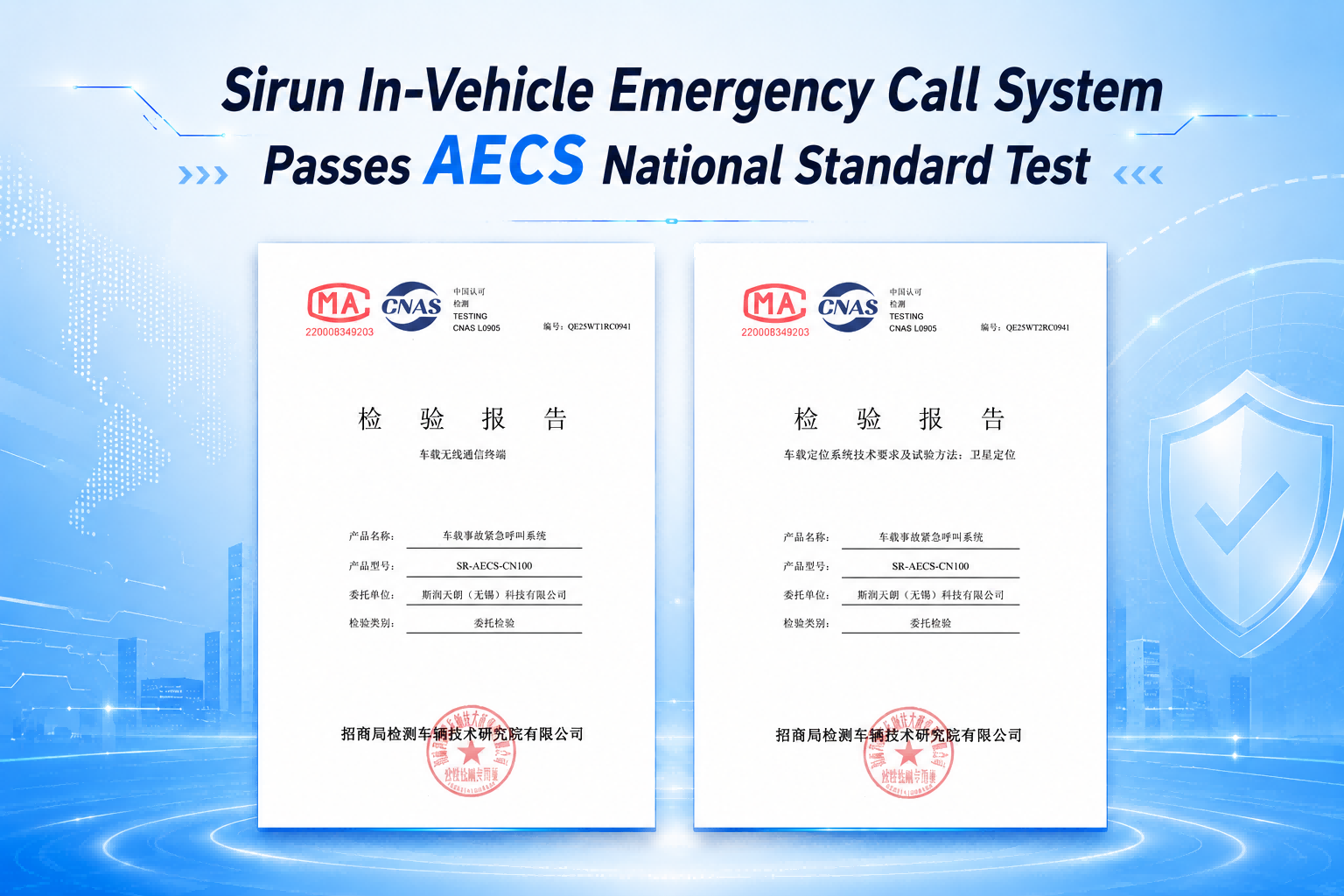
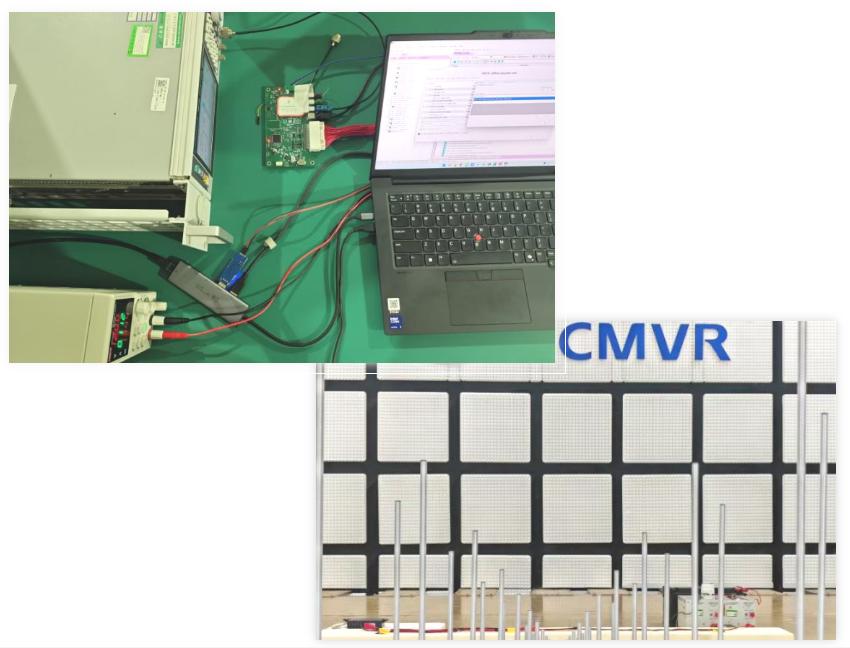
Recently, Sirun's vehicle emergency call system (AECS) successfully passed the full-item test of the mandatory national standard GB 45672-2025 "Vehicle Emergency Call Systems." This marks that Sirun's AECS product has met the core technical requirements of the national standard, with its technical strength and product quality once again validated by national-level authoritative certification, laying a solid foundation for helping automakers achieve compliance adaptation and promoting road safety assurance.
What is AECS and Why Is This Test Necessary?
GB 45672-2025 "Vehicle Emergency Call Systems" is a mandatory national standard led by the Ministry of Industry and Information Technology, which will come into effect on July 1, 2027. By then, all M1 and N1 class vehicles sold in China must pass this certification.
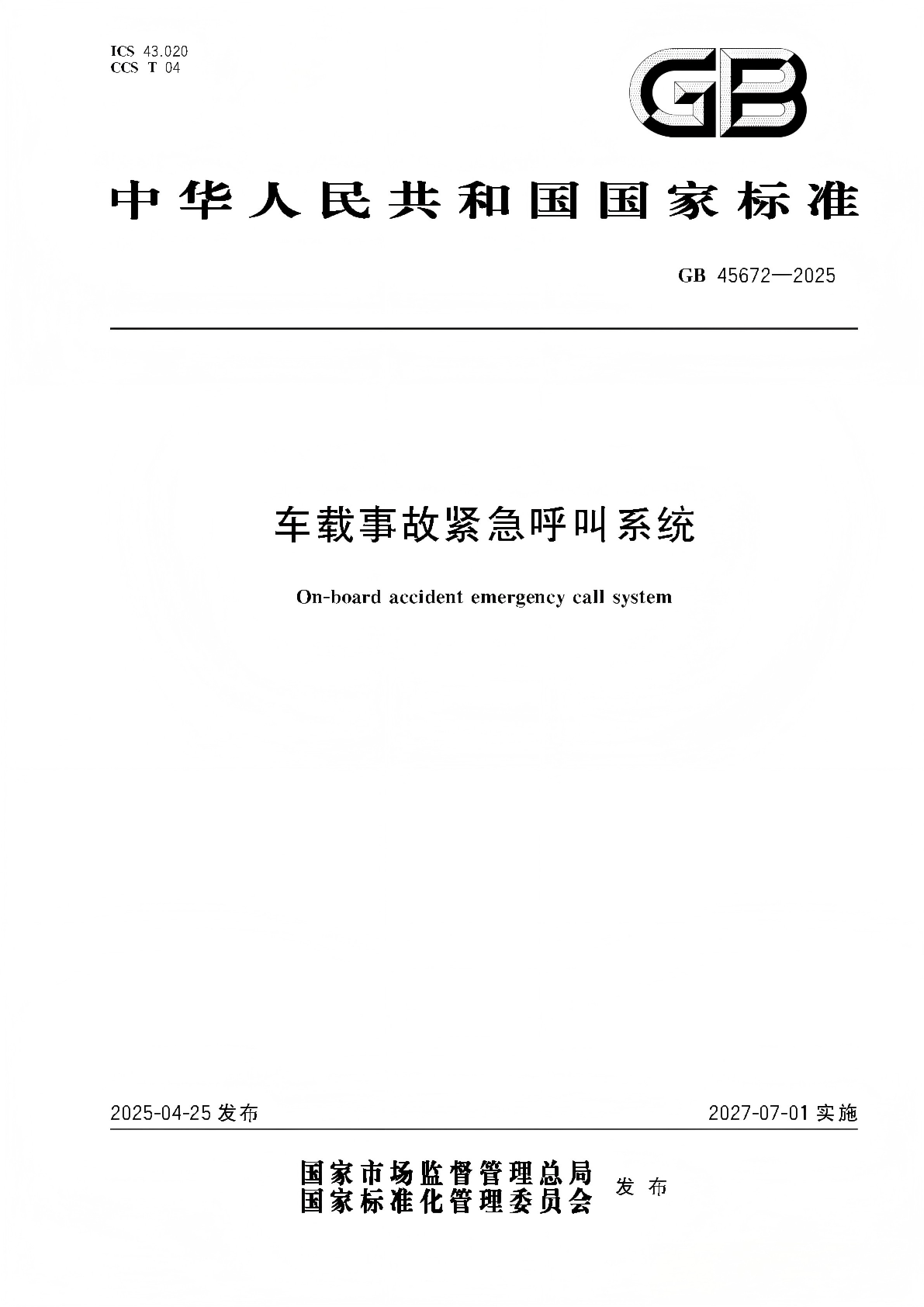
The standard requires that all newly produced M1 class vehicles (passenger cars with up to 9 seats) and N1 class vehicles (commercial vehicles up to 3.5 tons) must be equipped with a vehicle emergency call system. When the vehicle encounters an emergency such as a collision, the system can automatically or manually trigger an emergency call, synchronously sending the vehicle's location and relevant status information to the emergency call service platform, and immediately establishing two-way voice communication.
Simply put, this is another important mandatory automotive safety standard following seat belts and airbags. The implementation of this standard will effectively shorten emergency rescue response times for traffic accidents, provide timely and effective medical assistance to injured persons, and significantly improve the efficiency of trauma care for traffic accidents.
Global eCall Regulatory Differences
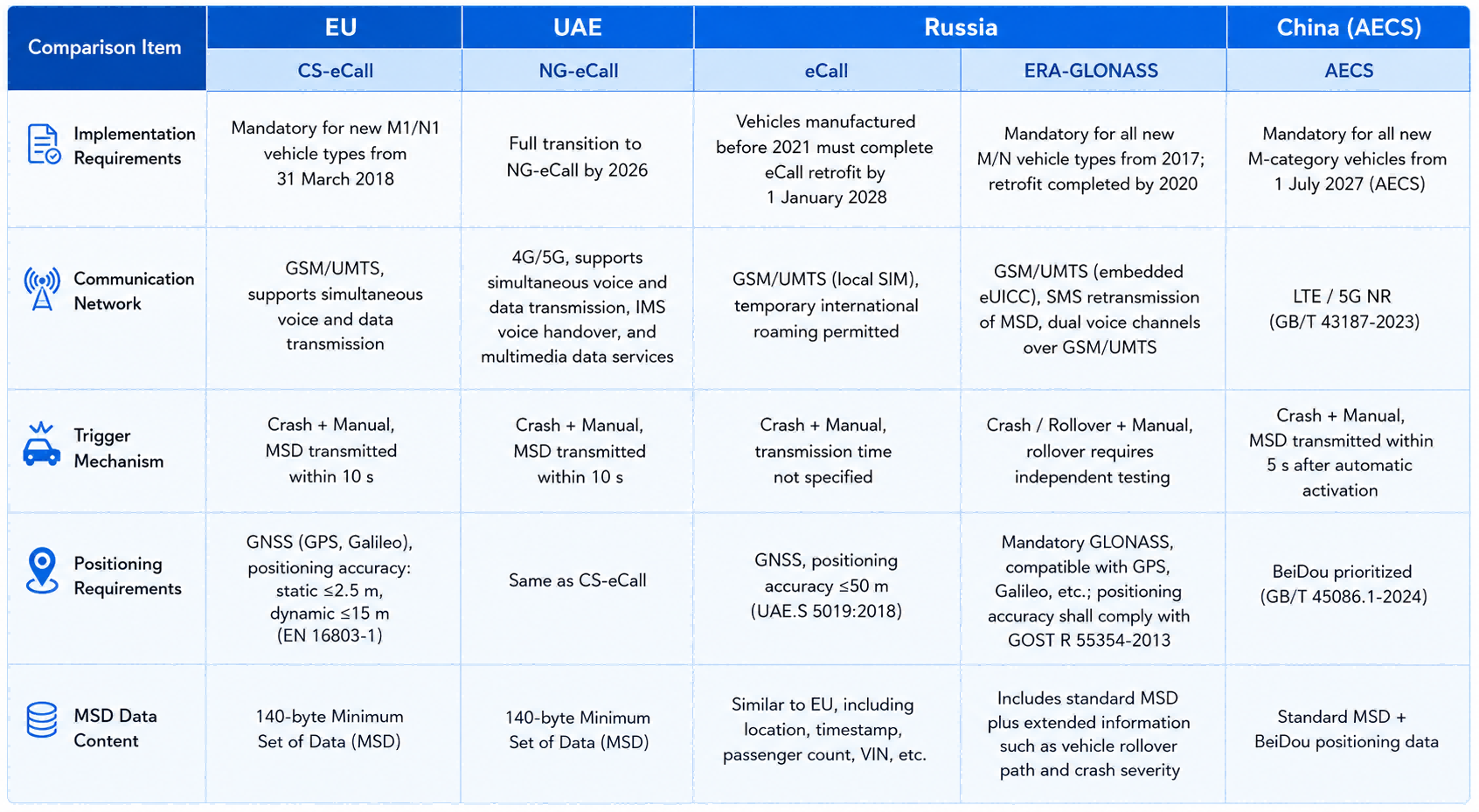
Currently, multiple countries and regions around the world have established or are in the process of establishing mandatory regulatory frameworks for vehicle emergency call systems. The European Union has mandated eCall since 2018 and is gradually transitioning to NG-eCall (based on 4G/5G IMS technology) from 2025 onward. The UAE has promulgated regulation UAE.S5019:2024, requiring new vehicle models to be equipped with eCall systems from 2026. Russia and the Eurasian Economic Union mandate the installation of the ERA-GLONASS system, with GLONASS as the core positioning system. Significant differences exist among countries in key technical approaches such as communication networks, trigger mechanisms, and positioning systems.
The following comparison table outlines the differences between the EU, UAE, Russia, and China's AECS across core dimensions:
Technical Strength: More Than Just "Passing"
As a connected vehicle solution provider with over a decade of deep expertise in the intelligent connected vehicle sector, Sirun has accumulated profound technical experience in the field of in-vehicle intelligent terminals. The successful passage of the full-item test of GB 45672-2025 serves as authoritative validation of the maturity and reliability of Sirun's AECS technical solution.
The core advantages of Sirun's AECS system are reflected in the following aspects:
Full-Chain Independent and Controllable: From chip selection to system design, a fully domestic end-to-end solution has been achieved, independent of external suppliers, ensuring supply chain security.
SOA Hardware-Software Decoupling Architecture: The system adopts a service-oriented software architecture that decouples hardware from software, facilitating OTA upgrades and functional iterations, enabling rapid adaptation to different automakers' platformization needs.
High-Precision Positioning and Reliable Communication: The system can rapidly provide accurate location information after an accident and establish a stable two-way voice communication link, ensuring that rescue forces obtain critical information as quickly as possible.
Automotive-Grade Reliability: Leveraging the intelligent manufacturing capabilities of Sirun's digital smart factory (with an automation rate exceeding 95% and a single-line daily production capacity exceeding 4,000 units), the product meets automotive-grade standards throughout the entire process from design to production.
Technology Iteration Driving Industrial Upgrades
The implementation of the AECS national standard not only fills the regulatory gap in the domestic vehicle emergency call system sector but also imposes higher requirements on the technical capabilities of in-vehicle communication terminals. Passing this national standard test is authoritative validation of the product's technical maturity.
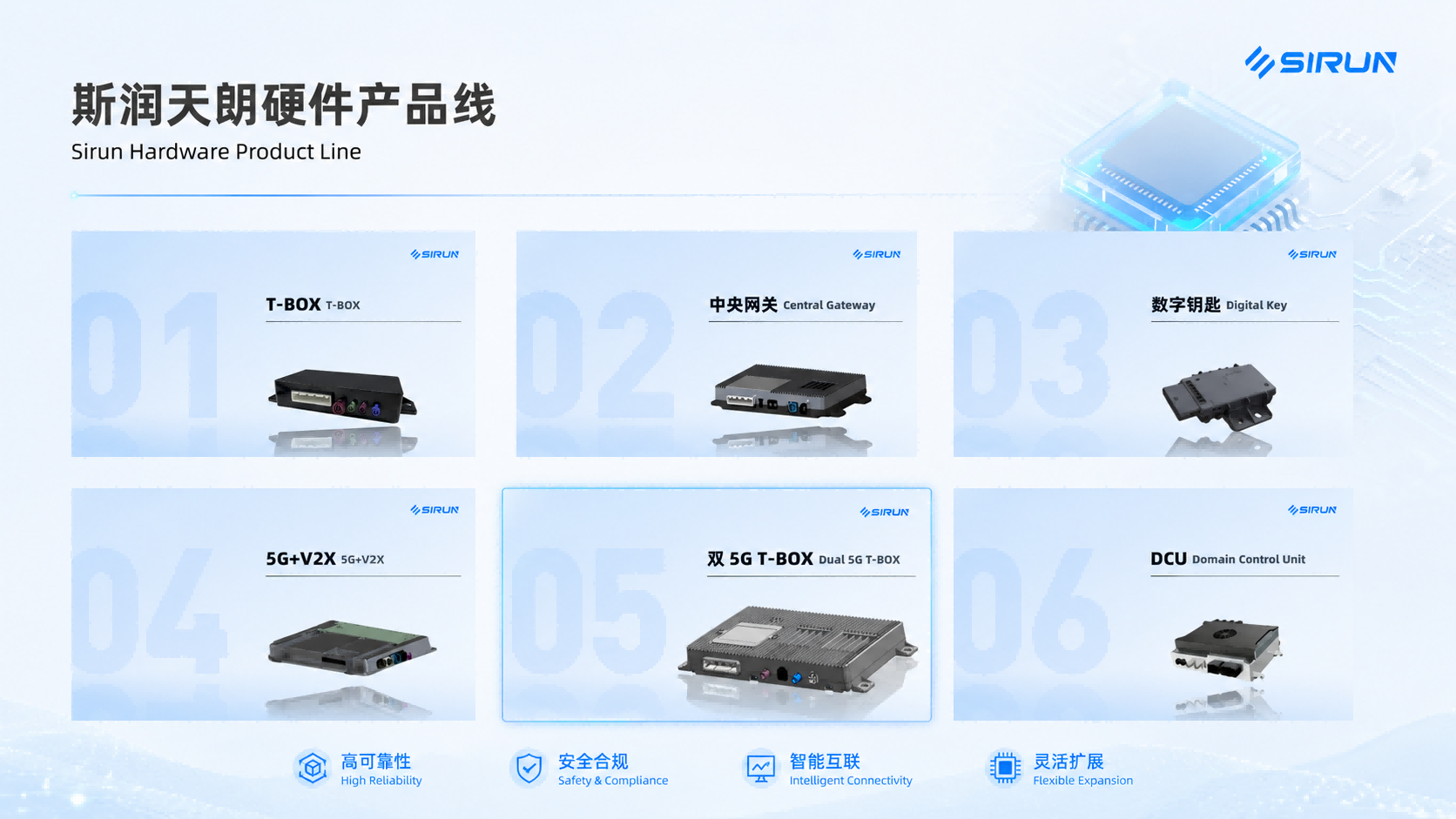
In the era of "software-defined vehicles," Sirun's communication terminals have continuously evolved from 4G to 5G RedCap, 5G, and 5G-A, establishing four core functional hubs: high-speed data transmission, vehicle status perception, remote control execution, and information security and evolution. Through the continuous iteration of cutting-edge technologies including V2X scenarios, high-precision positioning, digital keys, in-vehicle Wi-Fi 6, and AECS, the T-Box has transcended traditional communication modules to evolve into a comprehensive intelligent platform integrating connectivity, perception, control, and security, offering unlimited possibilities for the continuous evolution of intelligent connected vehicles.
Leveraging the intelligent manufacturing capabilities of its digital smart factory—with an automation rate exceeding 95% and a single-line daily production capacity exceeding 4,000 units—Sirun continues to drive technological upgrades and large-scale production of in-vehicle intelligent terminals. The successful passage of the AECS national standard test has further solidified Sirun's technological leadership in the field of in-vehicle intelligent terminals.
Moving Forward, Safeguarding Safety
With the approach of the July 1, 2027 mandatory implementation date of the AECS national standard, the vehicle emergency call system will become a "standard safety feature" on every new vehicle.
Sirun will continue to deepen its in-vehicle intelligent terminal technology, helping automaker customers successfully complete AECS compliance adaptation with more reliable products, more mature solutions, and more comprehensive services, safeguarding the safe travel of drivers and passengers.

 京公网安备 11010602103187号